


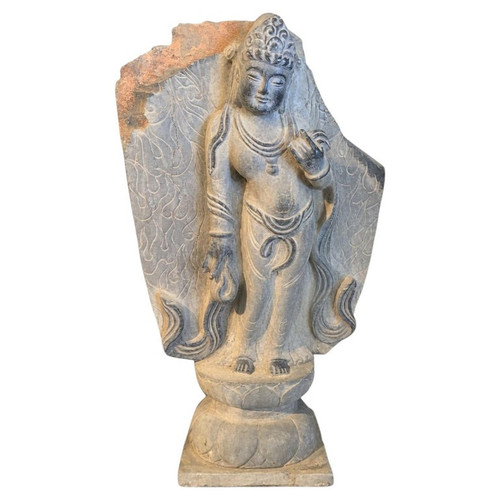
The elegantly proportioned Bodhisattva is depicted standing in a graceful tribhanga posture, the subtle threefold flexion of the body imparting a gentle, rhythmic movement to the composition. The figure stands upon a substantial double lotus pedestal, backed by an irregular stone mandorla intricately carved with scrolling flame motifs.
The serene countenance is characterized by a softly rounded face, full cheeks, elongated almond-shaped eyes beneath delicately arched brows, and small, gently pursed lips suggesting an enigmatic smile. The hair is arranged in carefully articulated curls beneath an elaborate foliate headdress. The slender torso is adorned with layered necklaces and a pendant, while flowing robes fall in sinuous folds. One hand is raised in a delicate gesture, the other extending downward with elegantly modeled fingers.
The sculpture reflects the artistic interchange between Indian, Central Asian, and Chinese Buddhist traditions along the ancient Silk Road, evident in its sensuous posture, softly modeled anatomy, elaborate ornamentation, and fluid drapery. The tall double lotus pedestal, carved with overlapping petals above a rectangular plinth, lends the composition a sense of monumentality. Natural weathering, darkened patina, and exposed warm pink terracotta-colored stone along the upper edge of the mandorla contribute to its richly textured, aged character.


